
Why Central AC Installation Is the Ultimate Home Comfort Upgrade
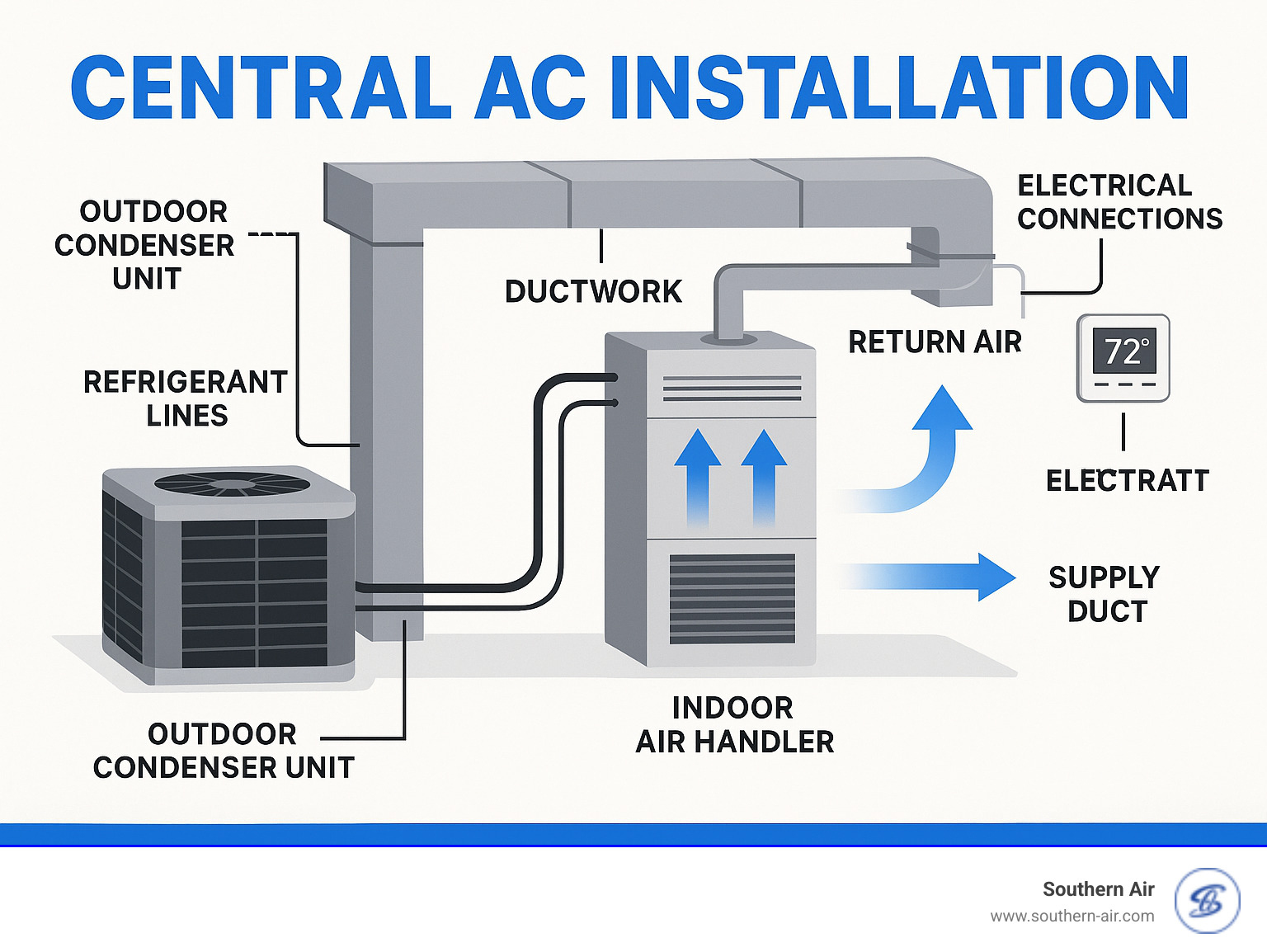
Central AC installation transforms your home into a comfortable living space by cooling, dehumidifying, and filtering the air in every room. A complete system includes an outdoor condenser unit, an indoor air handler, a ductwork system, a thermostat, and refrigerant lines.
Central air conditioning uses a split system where refrigerant circulates between the outdoor and indoor units. The outdoor condenser removes heat from your home, while the indoor air handler distributes cool air through supply ducts.
Unlike window units that only cool single rooms, central AC provides whole-home comfort with even temperatures. Modern systems also improve indoor air quality by filtering allergens and removing excess humidity. About 88 percent of U.S. households use air conditioning, and roughly two-thirds rely on central AC or a central heat pump, according to the U.S. Energy Information Administration. Homeowners choose central air for its convenience, quiet operation, and even comfort.
Why Choose Central Air Conditioning?
Central AC offers consistent temperature control throughout your home, eliminating hot and cold spots. Unlike noisy window units, the loudest components are outdoors, ensuring quiet operation inside. A modern central air system is a desirable amenity that can significantly increase your home's value, making it a smart investment. It also offers unparalleled convenience, allowing you to control your entire home's climate from a single thermostat. Today's units are also highly energy-efficient, leading to long-term savings on utility bills.
A Note on DIY vs. Professional Installation
While DIY projects can be rewarding, a central AC installation is a complex job best left to professionals. The process involves handling regulated refrigerants, performing precise load calculations to size the system correctly, and complex electrical work that can be dangerous. An improperly sized or installed system leads to inefficiency, higher bills, and a shorter lifespan. Professional HVAC contractors have the specialized tools, certifications, and expertise to ensure your system is installed safely and correctly for optimal performance and longevity.
Can you install central air yourself? In most cases, not legally. Buying and handling refrigerant requires EPA Section 608 certification, and in Virginia, HVAC work is performed by contractors licensed through the Virginia Board for Contractors. Most localities also require a mechanical permit and an inspection for a new or replacement system. Skipping those steps can void the manufacturer's warranty and cause problems when you sell the home.
Planning Your Project: Sizing, Efficiency, and System Choice
A successful central AC installation begins with careful planning. A professional home energy audit is the first step, assessing insulation, windows, and other factors that affect your home's cooling needs. You can learn more about how a comprehensive home energy audit can reveal critical insights.
This information is used for a load calculation, a detailed assessment that determines the precise size of the AC system your home requires. An improperly sized unit—too large or too small—will operate inefficiently, increase energy costs, and fail to properly dehumidify your home.
Understanding Key AC Metrics and Terminology
When shopping for a central AC installation, you'll encounter a few key terms:
- SEER (Seasonal Energy Efficiency Ratio): The higher the SEER rating, the more energy-efficient the unit.
- EER (Energy Efficiency Ratio): Measures efficiency during peak operation on the hottest days.
- Tons: Refers to cooling power (1 ton = 12,000 BTUs/hour), not weight. Proper sizing is crucial.
- MERV (Minimum Efficiency Reporting Value): Rates air filter effectiveness.
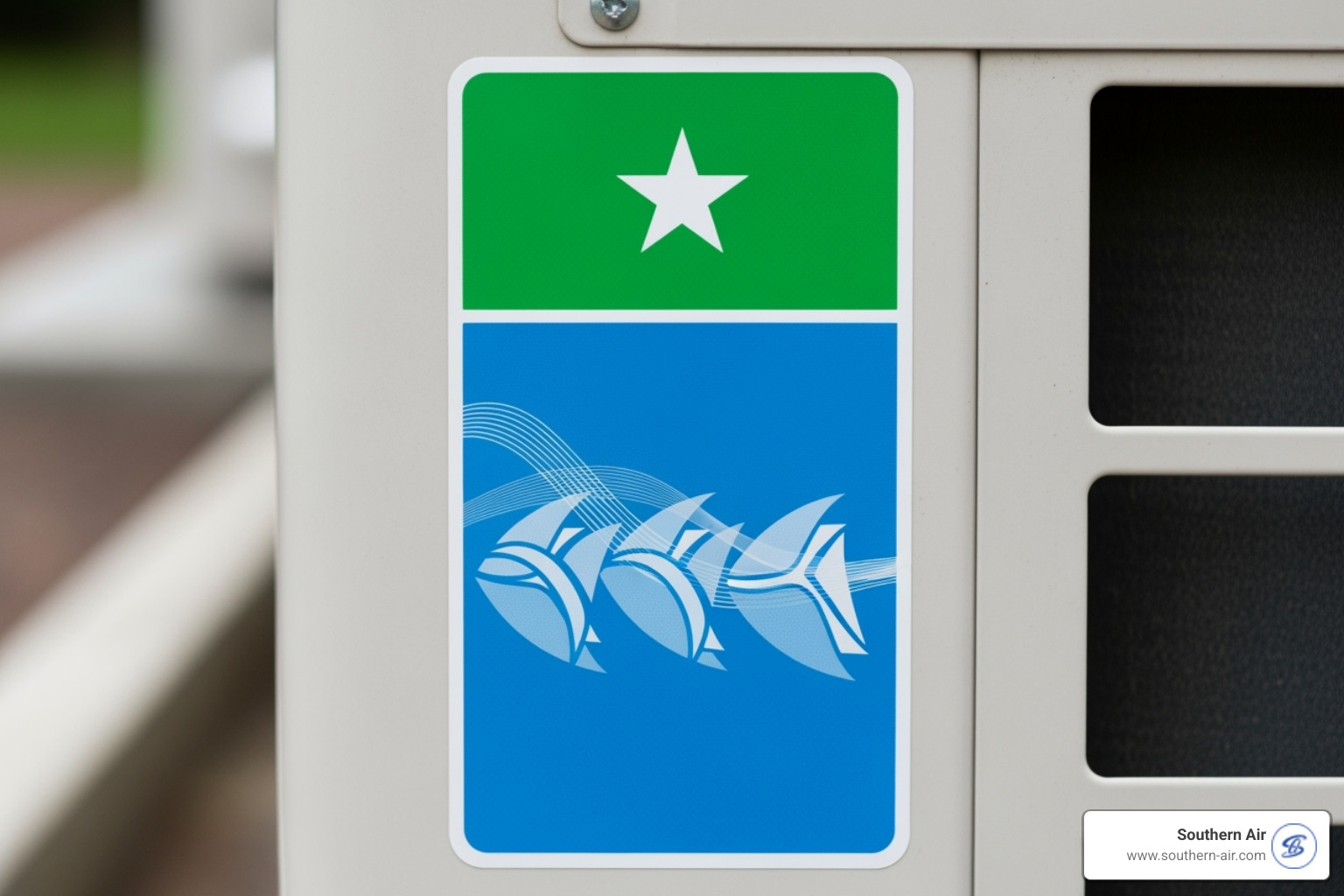
For top efficiency, look for the Energy Star designation, which identifies units with superior SEER ratings.
Key Factors for Your Central AC Installation
A well-maintained central AC system should provide about 15 to 20 years of reliable service. If your aging system requires a major repair (like a new compressor), replacement is often more cost-effective. Modern systems feature advanced efficiency technology like inverter-controlled compressors and efficient ECM blowers, which run more quietly and use less energy, leading to significant long-term savings.
We believe investing in a new HVAC system is a smart decision for any homeowner. For those in the Lynchburg area, we offer HVAC financing options to help make this upgrade more accessible.
Alternatives to Traditional Central AC
If traditional ducts aren't a fit for your home, several excellent alternatives exist:
- Ductless mini-splits: Ideal for homes without ductwork or for zoning individual rooms. They are highly efficient and less invasive to install.
- High-velocity systems: Use small, flexible tubes that fit into tight spaces in older homes with minimal disruption.
- Heat pumps: Provide both heating and cooling in one efficient system, perfect for moderate climates.
- VRV/VRF (Variable Refrigerant Volume/Flow) systems: Offer the ultimate in personalized climate control, connecting multiple indoor units to a single outdoor unit.
At Southern Air, we install a full range of new central AC units and alternatives, ensuring we can find the perfect cooling solution for your home.
When troubleshooting isn't enough, our Fredericksburg team can diagnose and fix it.
A Step-by-Step Guide to the Central AC Installation Process
Understanding the professional central AC installation process can help you oversee your project with confidence. This is an overview of the steps a professional takes, not a DIY guide.
Step 1: Pre-Installation Assessment and Ductwork Design
The process begins with a precise Manual J load calculation to determine the exact cooling needs of your home. Based on this, technicians design the ductwork system, planning the optimal layout for supply and return ducts and strategic register placement to ensure even, efficient airflow. For expert HVAC system design in Lynchburg, VA, our team at Southern Air handles every detail.
Step 2: Installing the Core Components
With the design finalized, the physical central AC installation begins.

The outdoor condenser is placed on a stable, level pad with adequate clearance for airflow. The indoor air handler is typically installed in a utility closet, attic, or basement. Technicians then connect the two units with precisely sealed refrigerant lines and set up a condensate drain to safely remove moisture.
Step 3: Ductwork Installation and Sealing
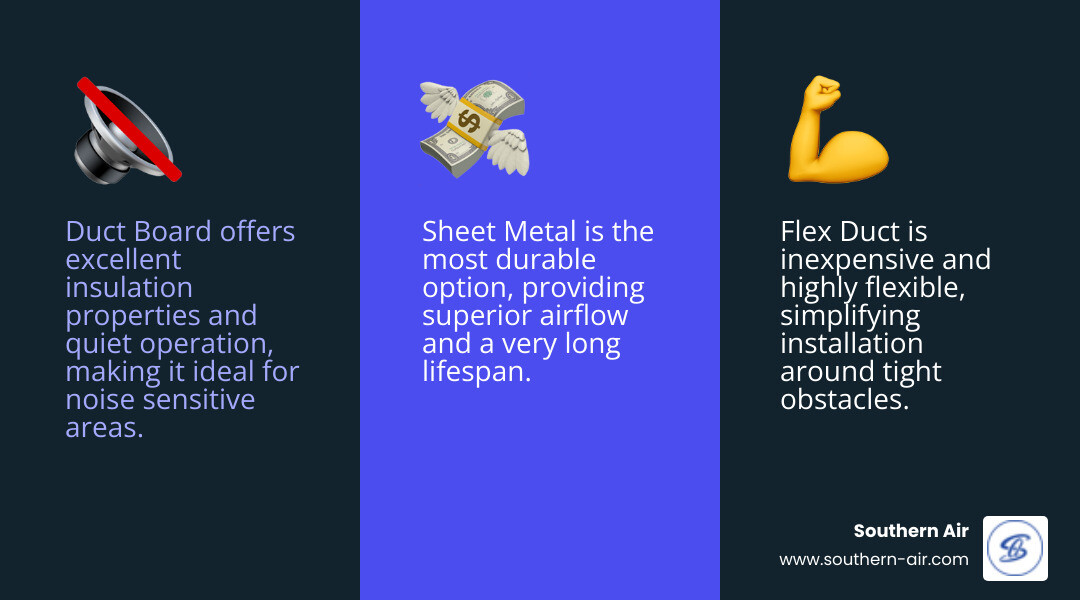
If new ductwork is needed, technicians will fabricate and install it according to the design plan. There are several types of ductwork, each with pros and cons:
A critical step is sealing joints with mastic to prevent air leaks, because ENERGY STAR estimates that a typical house loses about 20 to 30 percent of the air moving through its ducts to leaks, holes, and poor connections. Finally, insulating ducts in unconditioned spaces is essential to maintain temperature and prevent condensation.
Common Issues During a Central AC Installation
Professional central air conditioner installation is key to avoiding common pitfalls:
- Improper Sizing: Leads to inefficiency and poor dehumidification. A Manual J load calculation prevents this.
- Refrigerant Leaks: Reduce cooling and harm the environment. Professionals pressure-test lines to ensure a tight seal.
- Poor Airflow from Bad Duct Design: Proper planning ensures efficient air delivery and avoids hot spots.
- Electrical Wiring Errors: Can be a fire hazard. Licensed technicians ensure all wiring is safe and up to code.
- Clogged Condensate Lines: Can cause water damage. Professionals ensure proper drainage and prevent AC leaking water problems later.
An experienced technician avoids these issues through expertise, specialized tools, and adherence to industry standards.
Optimizing Your New System for Peak Performance
Once your central AC installation is physically complete, the system must be optimized. This involves post-installation checks, including verifying refrigerant levels and electrical connections. Technicians then perform system calibration, adjusting the thermostat and fan speeds for peak performance. Finally, they are balancing airflow by adjusting dampers at each register to eliminate hot and cold spots, ensuring consistent comfort throughout your home.

Choosing the Right Thermostat
Your thermostat is the system's brain. Programmable thermostats let you set schedules to save energy. Smart thermostats connect to Wi-Fi, learning your habits and allowing remote access via your smartphone. ENERGY STAR certified smart thermostats save about 8 percent on heating and cooling bills on average. Ultrasmart proprietary thermostats are designed by the HVAC manufacturer to open up advanced features and maximize efficiency. Our team can handle smart thermostat installation as part of your new system.
Air Filters and Indoor Air Quality
Your air filter protects your equipment and cleans your air. Options range from standard 1-inch filters to deep-pleated media filters that offer superior filtration and last longer. For advanced purification, electronic air cleaners use an electrostatic charge to capture tiny particles, while photocatalytic air cleaners use UV light to destroy contaminants.
The filter's effectiveness is measured by its MERV rating—a higher number means better filtration. We'll help you choose the right balance of filtration and airflow for your system. A consistent filter replacement schedule is crucial to keep your system running efficiently.
The Benefits of Zoned Air Conditioning
Zoned air conditioning divides your home into separate areas, each with its own thermostat. Motorized in-duct dampers direct cool air only where it's needed, providing room-by-room comfort control. This eliminates thermostat wars and can lower energy use by not cooling rooms nobody is using. (The 30 percent figure has no source.) For comprehensive heating and air conditioning services in Lynchburg, VA, including zoning, our team can design a personalized solution.
Frequently Asked Questions about Central Air
When it comes to central AC installation, homeowners often have questions. Here are answers to some of the most common ones.
How long does a central AC system last?
A well-maintained central AC system typically lasts about 15 years. Longevity depends on the quality of the installation, your local climate, and most importantly, regular professional maintenance. When a system over 15 years old suffers a major component failure, replacement is usually the most economical choice.
How much does central AC installation cost?
The cost varies widely depending on your home's size, the system's efficiency (SEER rating), the brand, and local labor rates. The biggest variable is existing ductwork; installing a new system in a home without ducts will cost significantly more than a simple replacement. It's a major investment, but one that pays off in comfort and home value for years.
Can I install central air in a house without existing ducts?
Yes, absolutely. While more complex, professionals can retrofit homes without ducts. One option is to install traditional sheet metal or flex ducts, which may require opening some walls or ceilings. For less disruption, high-velocity systems use small, flexible tubes that can be snaked through existing structures. Ductless mini-split systems are another excellent option, providing zoned cooling without any ductwork at all.
Conclusion: Is a Central AC Installation Worth It?
After reviewing the process and benefits, it's clear that a central AC installation is a worthwhile investment. It provides whole-home comfort, eliminating hot and cold spots for a consistently pleasant environment. Modern, high-efficiency systems also deliver significant energy savings, lowering your monthly utility bills. Furthermore, a new central AC system increases your property value, making it a smart financial decision.
However, the quality of the installation is paramount. An improper installation can lead to inefficiency, frequent repairs, and frustration. That's why the importance of professional work cannot be overstated. At Southern Air, we've been perfecting HVAC installation since 1946. Why trust us for HVAC installations? Because our reputation is built on decades of experience and customer satisfaction.
Whether you live in Lynchburg, Charlottesville, Roanoke, Harrisonburg, or elsewhere in our Virginia, West Virginia, and North Carolina service areas, our experienced team designs and installs central air for optimal performance. Ready to transform your home's comfort? Schedule your central air installation estimate today.