By Russ Jackson
At James Madison University, the future of campus infrastructure is taking shape in a place most students will never see. Beneath the surface of daily campus life, lecture halls, dormitories, and laboratories exists a system just as vital as any classroom: the central boiler plant. It is here, in a complex network of steel, fuel, water, and steam, where Southern Air's Industrial Service Department is helping power the university's next generation.
A Long-Term Investment in Campus Infrastructure
JMU's new boiler plant is part of a long-term effort to modernize campus utilities, ensuring reliable heating and cooling capacity for decades to come. As the university continues to grow, so too does the demand for efficient, resilient energy systems. The project involved demolishing the existing plant and rebuilding it entirely, all while maintaining uninterrupted service through a secondary plant elsewhere on campus. This logistical challenge required precision planning and execution just in itself.
This is the second major project Southern Air has supported at JMU, following our work on the James Madison University dormitory project.
Inside the Plant: Boilers, Piping, and Critical Support Systems
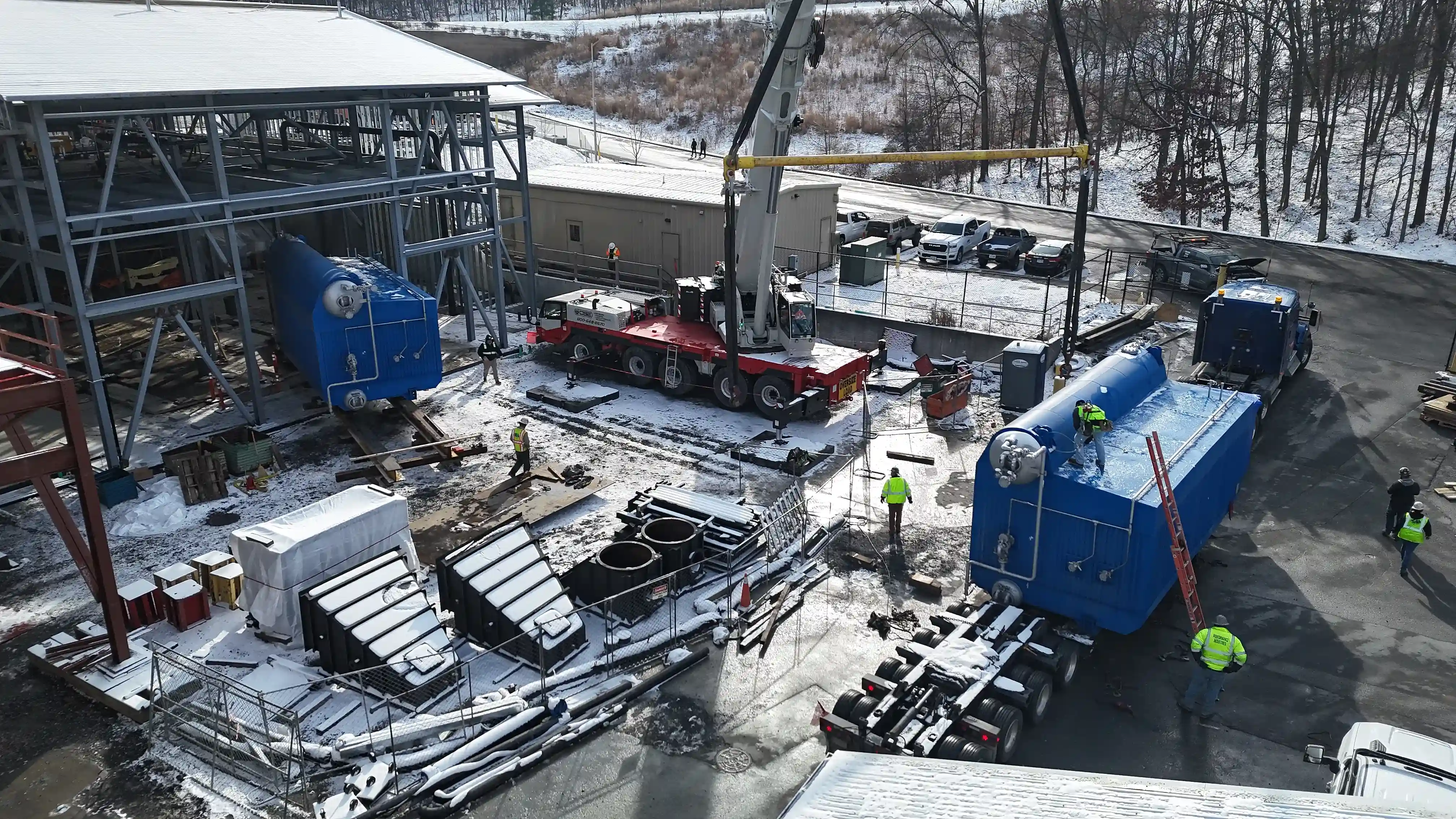
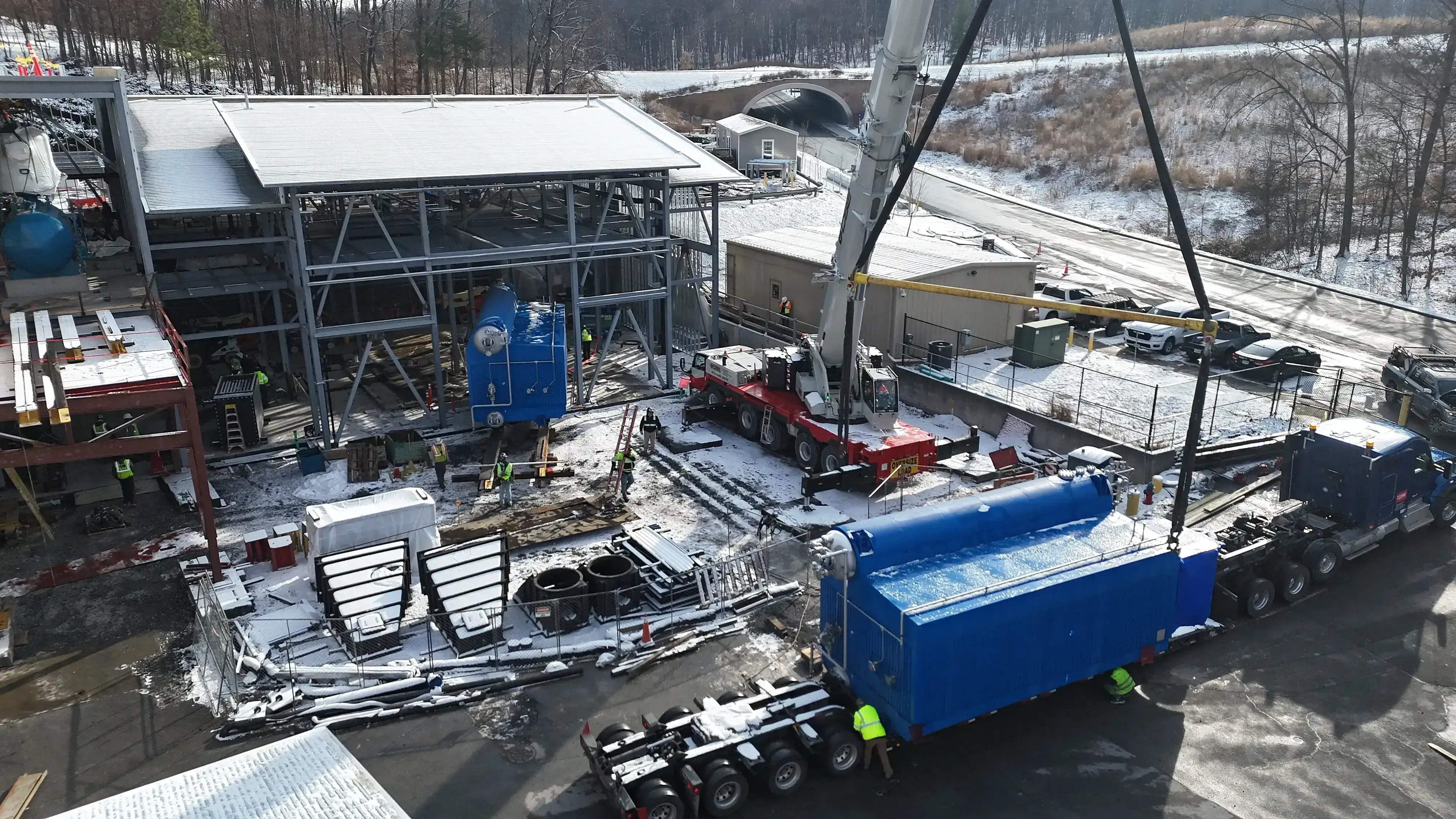
Southern Air's role has been both foundational and far-reaching. Led by Industrial Service Manager Fred Burton Jr., the team has been responsible for installing and connecting nearly every critical system inside the plant. That includes the boilers themselves, along with the intricate web of steam and water piping that allows them to function. Supporting systems including de-aerator tanks that remove oxygen from water to prevent corrosion, condensate return systems, chemical feed systems, pumps, and water softeners have all been carefully integrated. Cooling towers and associated piping extend the plant's capabilities even further, while newly installed chillers ensure balanced temperature control across campus.
Outside the Walls: 50,000-Gallon Fuel Tanks and a 32-Foot Excavation
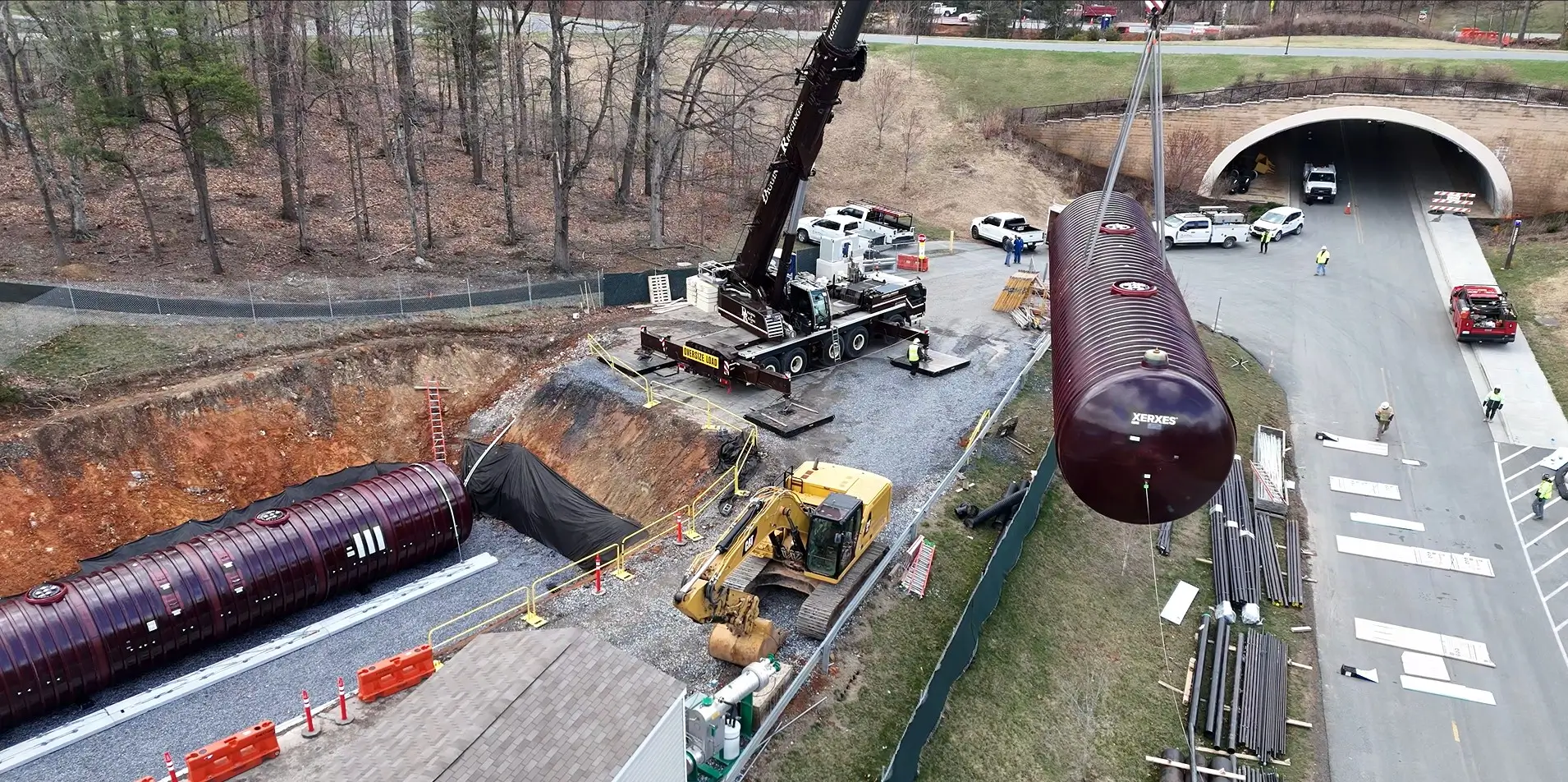
Outside the building, the work goes just as deep. Southern Air installed two 50,000-gallon underground fuel tanks designed to supply the boilers with multiple fuel sources, including natural gas, traditional #2 fuel oil, and biodiesel. These tanks are anchored securely with "dead men" heavy stabilizing blocks which prevent them from shifting or floating due to groundwater pressure. They are buried much like those at a commercial fueling station. The excavation itself was massive: a 32-foot-deep pit carved with precision, completed in just over a week, forming the foundation for the plant's fuel infrastructure.
Precision Work at Height
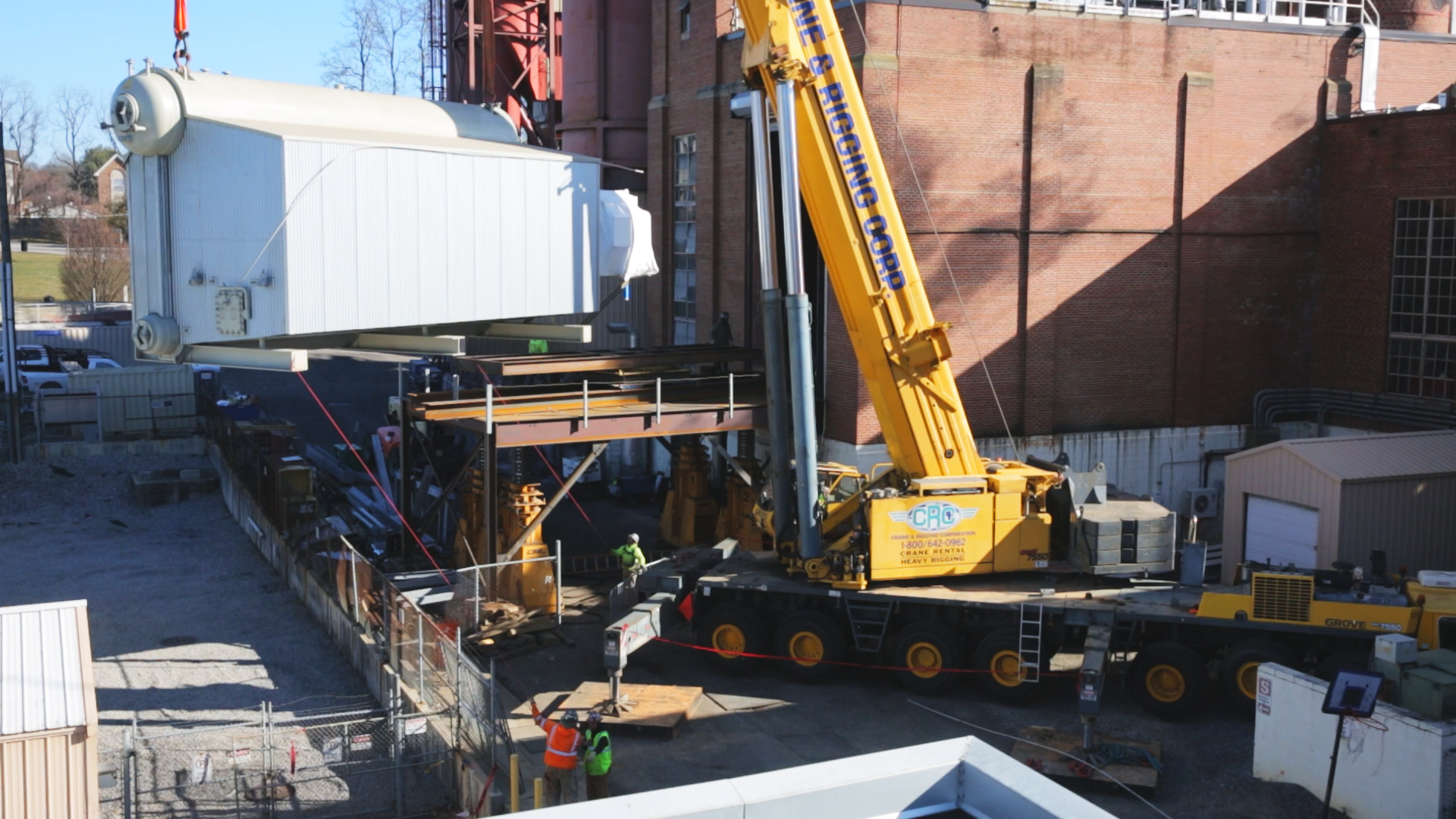
Inside, the work is no less demanding. Boiler stacks were lifted and set into place using cranes, with crews working at height as they weld, align, and secure components with exacting accuracy. Among those leading the charge in the field are Southern Air's Kenny Lyon and Eddie Drummand, whose experience and steady execution have been instrumental in bringing the system together. Their work, like much of what happens in industrial construction, is rarely visible but absolutely essential.
The Unglamorous Side of Progress
This is the unglamorous side of progress. There are no ribbon cuttings for steam lines or applause for properly balanced pumps. Yet without this work, the campus simply does not function. Classrooms would be cold, labs would shut down, and dormitories would lose the comfort students depend on.
Southern Air's Industrial Service Department thrives in this space where complexity meets necessity. Their work at JMU is not just about installing equipment but about delivering reliability, safety, and long-term performance. It's about ensuring thousands of students can learn, live, and grow without ever having to think about what keeps their campus running.
And in that quiet reliability lies the true measure of the work.
Gallery